
Cisco Certified Network Associate (CCNA)
The Cisco Certified Network Associate (CCNA) course provides foundational knowledge and skills required to manage and operate small to medium-sized networks.
- Course fee
- Contact us
- Duration
- 5 days
- Group rate
- Ask an advisor
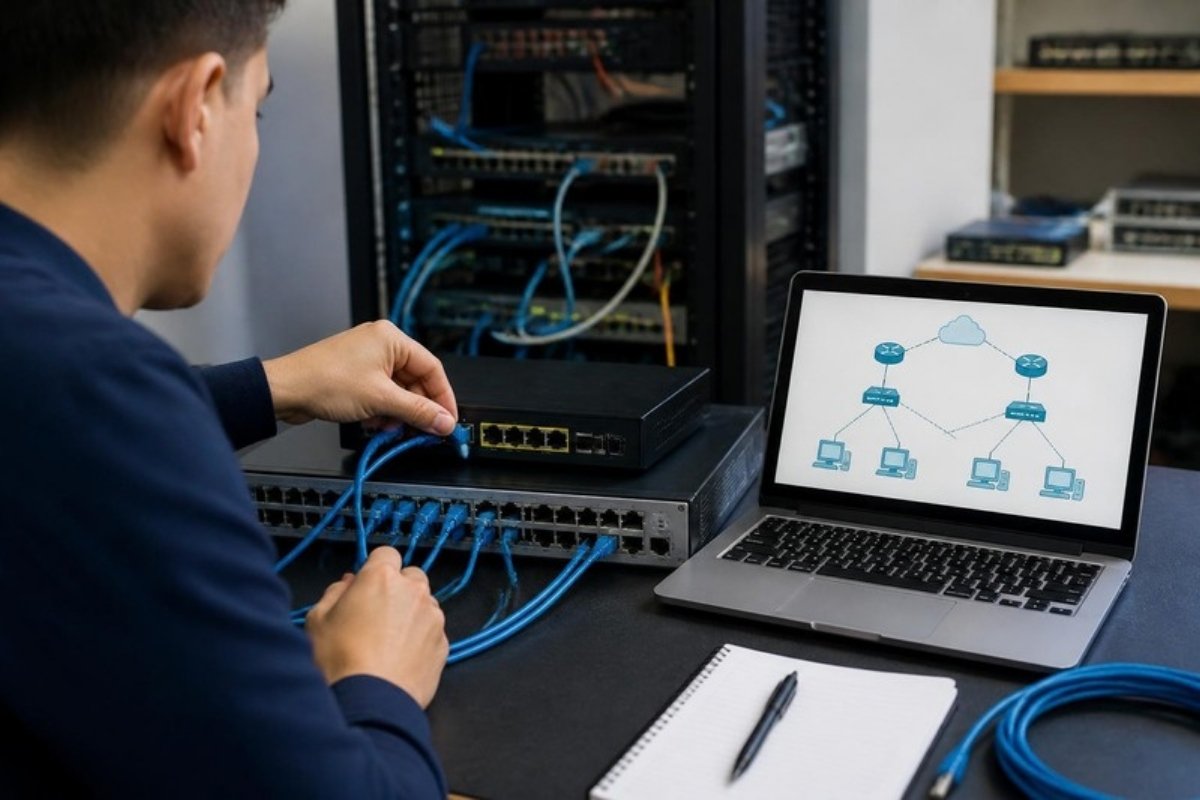
Course overview
The Cisco Certified Network Associate (CCNA) course provides foundational knowledge and skills required to manage and operate small to medium-sized networks. It covers a wide range of networking topics, including network fundamentals, IP connectivity, network access, security, and automation. This course prepares participants for the CCNA (200-301) certification exam.
Training methodology
Lectures and Presentations: In-depth explanations of Cisco networking concepts and technologies.
Hands-On Labs: Practical exercises for configuring and troubleshooting Cisco network devices.
Case Studies: Real-world scenarios to apply networking knowledge and skills.
Group Discussions: Interactive sessions to explore network challenges and best practices.
Quizzes and Practice Exams: Assessments to evaluate understanding and readiness for the certification exam.
Target competencies
- Network fundamentals and Cisco device configuration
- IP addressing and routing protocols
- Network access and security
- Network automation and programmability
Course objectives
By the end of the course, participants will be able to:
- To provide a comprehensive understanding of Cisco networking technologies and principles.
- To develop practical skills in configuring and troubleshooting Cisco network devices.
- To prepare participants for the Cisco Certified Network Associate (CCNA) certification exam.
- To familiarize participants with real-world networking scenarios and solutions.
Course outline
- Understanding Network Basics (OSI Model, TCP/IP Model)
- Identifying Network Devices and Their Functions (Routers, Switches, Hubs)
- Understanding Network Topologies and Architectures
- Exploring IP Addressing and Subnetting
- Configuring and Verifying IPv4 and IPv6 Addressing
- Implementing Static and Dynamic Routing Protocols (RIP, OSPF, EIGRP)
- Troubleshooting IP Connectivity Issues
- Understanding and Configuring NAT (Network Address Translation)
- Configuring and Managing VLANs (Virtual LANs) and Trunking
- Implementing Spanning Tree Protocol (STP) and EtherChannel
- Configuring Access Control Lists (ACLs) and Port Security
- Implementing Wireless LAN (WLAN) Access and Security
- Configuring DHCP (Dynamic Host Configuration Protocol) and DNS (Domain Name System)
- Implementing Network Time Protocol (NTP)
- Understanding and Configuring QoS (Quality of Service)
- Managing and Troubleshooting IP Services
- Implementing Network Security Best Practices
- Configuring and Managing Security Features (Firewall, VPN)
- Understanding and Preventing Network Attacks (Denial of Service, Man-in-the-Middle)
- Securing Network Devices and Access
- Understanding Network Automation Concepts and Benefits
- Implementing Cisco DNA (Digital Network Architecture)
- Using Cisco APIs and Network Programmability Tools
- Exploring Network Automation with Python and Ansible
Morning and evening classes are available. CompuBase Training Center, Abu Dhabi.

